
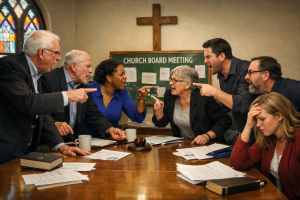
Wherever people gather, conflict eventually follows. Even in healthy churches, strong personalities, differing perspectives, and passionate convictions can collide. Staff teams and church boards are especially vulnerable because they carry weighty responsibility, spiritual authority, and diverse leadership styles.
Conflict isn’t the enemy—unmanaged conflict is. When handled well, tension becomes a catalyst for clarity, unity, and growth. When ignored, it becomes a slow leak that drains momentum and fractures trust.
Here are practical steps to help pastors and leaders navigate and mitigate conflict between staff or board personalities.
Start by Naming the Real Issue
Most conflicts aren’t actually about the surface disagreement. They’re about:
Read More
- Misaligned expectations
- Communication breakdowns
- Personality differences
- Unspoken assumptions
- Past unresolved tension
Healthy leaders slow down long enough to identify the root, not just the symptom.
Establish Clear Roles and Boundaries
Many staff–board conflicts arise because the lines between governance and ministry execution get blurry.
Clarify:
- Who decides what
- Who communicates what
- Who is accountable for what
- Where authority begins and ends
Clear boundaries reduce power struggles and protect relationships.
Create a Culture of Direct, Respectful Communication
Indirect communication—side conversations, venting, triangulation—destroys unity.
Encourage:
- Face-to-face conversations
- “I” statements instead of accusations
- Listening to understand, not to win
- Asking clarifying questions before assuming motives
Direct communication builds trust and prevents small issues from becoming big ones.
Use Personality and Strengths Assessments Wisely
Tools like DISC, StrengthsFinder, or Enneagram aren’t magic, but they are helpful.
They help teams understand:
- How each person processes information
- How they make decisions
- What triggers stress
- How they prefer to communicate
When leaders understand each other’s wiring, conflict becomes easier to navigate.
Address Tension Early—Not After It’s Exploded
Unresolved conflict compounds. What starts as a small irritation becomes a relational fracture.
Healthy teams:
- Don’t wait for the “right moment”
- Don’t hope it will disappear
- Don’t spiritualize avoidance
Early intervention is an act of stewardship.
Bring Conversations Back to Mission and Values
When personalities clash, mission unites.
Ask:
- “What outcome best serves our mission?”
- “What decision aligns with our values?”
- “What honors the people we’re called to shepherd?”
Mission-centered conversations shift the focus from winning to serving.
Create Safe Spaces for Honest Dialogue
People need to know they can speak truth without being punished for it.
Build safety by:
- Inviting feedback
- Responding calmly
- Avoiding defensiveness
- Thanking people for their honesty
Safety doesn’t eliminate conflict, but it transforms how conflict feels.
Involve a Neutral Third Party When Needed
Sometimes the wisest move is to bring in:
- A mediator
- A denominational overseer
- A trusted outside consultant
- A seasoned pastor
A neutral voice can break stalemates and help teams see blind spots.
Reinforce Unity Through Prayer and Spiritual Practices
Conflict isn’t just organizational—it’s spiritual.
Strengthen unity through:
- Regular prayer together
- Shared devotionals
- Fasting during major decisions
- Confessing faults and extending grace
Spiritual unity softens hearts and aligns perspectives.
Build a Culture of Honor
Honor doesn’t mean agreement—it means valuing the person even when you disagree with their position.
Honor looks like:
- Speaking well of each other publicly
- Giving the benefit of the doubt
- Celebrating strengths
- Protecting each other’s credibility
Honor creates an atmosphere where conflict can be resolved without damaging relationships.
What’s the Big Idea
Conflict isn’t a sign of dysfunction—it’s a sign that people care deeply. The goal isn’t to eliminate conflict but to steward it well. When leaders commit to clarity, humility, and Spirit-led communication, even the most challenging personalities can work together in unity.