

//Vision//
To ignite a global revival that transforms nations through the empowerment and equipping of church leaders, fostering communities of faith that thrive in love, healing, and unity.
//Mission//
We are committed to fostering a movement of revival among the nations, where the love of Christ is evident in every corner of society. Our mission encompasses three core objectives:
1. //Empower Church Leaders//
We dedicate ourselves to equipping church leaders with the resources, training, and support needed to effectively lead their congregations and communities. Through workshops, mentorship programs, and collaborative networks, we aim to inspire bold leadership that reflects the heart of God.
2. //Facilitate Revival//
We will organize gatherings, conferences, and outreach initiatives that cultivate an atmosphere of worship, prayer, and intercession. By uniting believers from diverse backgrounds, we seek to create a powerful movement of the Holy Spirit that draws people back to faith and ignites a passion for holistic transformation in their communities.
3. //Champion Healing//
We will advocate for and facilitate healing, both physically and spiritually, by creating spaces for prayer, ministry, and outreach to those in need. Through partnerships with healthcare professionals, prayer teams, and community organizations, we aim to be a beacon of hope that demonstrates God’s love and compassion for a hurting world.
//Whatis the point//
Our ultimate goal is to witness a profound outpouring of healing and hope across the globe, as individuals and communities experience the transformative power of God. We envision a world where the church stands as a light in darkness, bringing forth revival, healing, and restoration to every nation.
 Welcome to Sanctuary Place: A Place of Healing, Restoration, and Sanctuary for Ministers
Ministers tirelessly serve their congregations, offering solace, guidance, and unwavering support. Yet, who ministers to the ministers? Sanctuary Place answers this call. This haven offers a respite, a place where those who guide others can find their own refuge and renewal.
The First Encounter – TikTok
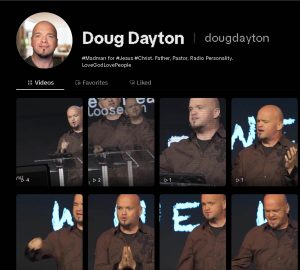 Have you ever wondered whether spiritual encounters feel different depending on what you believe?
Doug remembers the very first encounter he had with a spirit while he was a Christian. Years later, while practicing witchcraft, he experienced something that felt completely different.
Same person. Two spiritual paths. Two very different encounters.
What changed? What did he see—and what did it reveal about the world of spirits?
Expand the Read More section to watch Doug tell the full story on a Tiktok Series, and decide for yourself.
Redeeming October: How Churches Can Use Halloween for Outreach
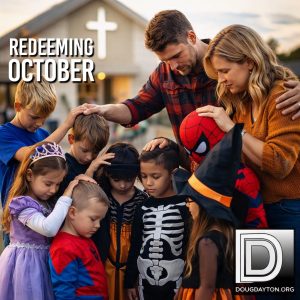 Halloween is one of the most socially active nights of the year. Millions of families leave their homes, visit neighborhoods, and gather at community events. Instead of retreating from the cultural noise, churches can step into it with purpose—offering hope, connection, and the message of Jesus in ways that feel natural, welcoming, and full of life.
Over the years, churches have branded October 31st in many ways: Trunk or Treat, Harvest Festival, Hallelujah Night, Fall Fest, and more. The name matters far less than the heart behind it. The goal is simple: Create an environment where people encounter the love of Jesus in a way that fits the moment.
🎃 Trunk or Treat: A Proven, Family-Friendly Outreach
Many churches have seen tremendous success with Trunk or Treat events. They’re simple, scalable, and easy for your congregation to participate in.
Labor Day Devotional
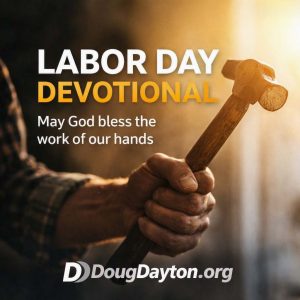 Labor Day always sneaks up on me. It’s supposed to be a long weekend, a breather before fall settles in, but it usually ends up stirring something deeper. Maybe it’s because work is such a strange mix of gift and grind. Some days it feels like purpose, and other days it feels like pushing a boulder uphill. Yet Scripture keeps pulling me back to this simple truth: God doesn’t just watch our work from a distance. He gets involved in it. He blesses it. He shapes it. He uses it.
There’s a line in Psalm 90 that has always felt honest about the tension: “Establish the work of our hands for us—yes, establish the work of our hands.” (Psalm 90:17, NIV). It’s a prayer that admits we can build, plan, hustle, and create, but unless God breathes on it, it doesn’t carry the weight we hope it will. Moses wasn’t asking for success in the modern sense. He was asking for permanence—something that lasts beyond the moment, something God Himself would anchor.
How We Got the Bible: Why Certain Books Were Excluded and Why We Can Trust the Canon
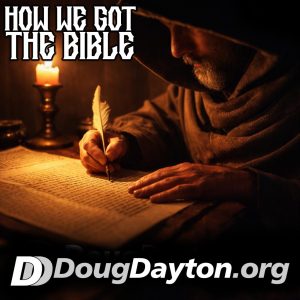 For many believers, the Bible feels like a single, unified book handed down directly from heaven. In reality, it is a carefully preserved library of writings produced over more than fifteen centuries, across multiple cultures, languages, and historical moments. Yet despite its diversity, Scripture speaks with remarkable unity because Christians believe God guided its formation.
Understanding how the Bible came together strengthens our confidence in why we can trust it today.
1. The Formation of the Biblical Canon
The term canon refers to the authoritative collection of books recognized as Scripture. The canon did not appear overnight. It developed gradually as God’s people recognized which writings carried divine authority.
Bounce: Developing a Resilient Life
 I’ll never forget the fall of the year I became a teenager. It felt like every guy around me was suddenly capable of growing lumberjack‑level facial hair. Our seventh‑grade class looked like a gathering of thirty‑year‑olds, and Picture Day was coming fast. Desperate to make my peach fuzz look more like a mustache than silky fur, I devised a plan. My sister had left behind a neon vat of waterproof mascara—thick as playdough—and I went to work crafting the perfect “mustache.” It looked decent… until I stepped outside into 95‑degree humidity. By the time I reached school, my face had become a giant black smear. I scrubbed for half an hour, but that mascara was the most resilient substance on earth.
In life, we all need that kind of resilience—something that doesn’t wash off when the heat rises. Hebrews 12:1‑3 calls us to run our race with perseverance, fixing our eyes on Jesus, who endured the cross and opposition so we “will not grow weary and lose heart.” The heroes of faith cheer us on, reminding us that resilience is not accidental—it’s cultivated.
How to Discern if a Word Is Truly From the Lord
 In charismatic circles, we deeply value the prophetic voice of the Holy Spirit. We believe God still speaks, still leads, still nudges His people with clarity and purpose. Yet with that beautiful reality comes a sober responsibility: learning to discern whether a word is genuinely from the Lord or simply a well‑intentioned impression from someone’s own spirit. Discernment is not optional; it is essential. Scripture reminds us, “Do not treat prophecies with contempt. Test everything; hold on to what is good.” — 1 Thessalonians 5:20–21 (NIV). God invites us to receive, but He also commands us to test.
In charismatic communities, it’s not uncommon for someone to approach you and say, “I have a word from the Lord for you.” When that happens, your first filter should always be Scripture. God will never contradict His written Word. “All Scripture is God‑breathed…” — 2 Timothy 3:16 (NIV). If a prophetic word violates biblical truth, you can dismiss it immediately. The Bible is the final authority, and any genuine word from the Lord will align with its truth.
A true prophetic word typically confirms something the Lord is already stirring in your spirit. God is a God of order, not confusion. Often, when He speaks through another person, it simply echoes what He has already whispered