
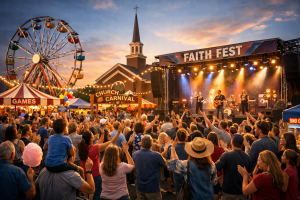
Big ministry events—outreach festivals, conferences, holiday productions, community serve days—can become catalytic moments for your church. They build momentum, deepen relationships, and open doors for new people to encounter Jesus. But large-scale events don’t happen by accident. They require intentional planning, clear communication, and a unified team.
Here’s a practical, step-by-step guide to planning a major ministry event with excellence and peace.
Start With Purpose, Not Logistics
Before you pick a date or book a vendor, answer one question: Why are we doing this event?
Your purpose determines everything else—your budget, your programming, your marketing, and your follow-up strategy.
Clarify:
Read More
- The spiritual goal
- The target audience
- The desired outcome (salvations, community engagement, discipleship, volunteer activation, etc.)
A clear purpose keeps the event aligned and prevents unnecessary complexity.
- The desired outcome (salvations, community engagement, discipleship, volunteer activation, etc.)
Build the Right Planning Team
Large events require collaboration. Don’t try to carry it alone.
Recruit a team that includes:
- A project lead
- Logistics coordinator
- Volunteer coordinator
- Communications/marketing lead
- Worship/production lead
- Hospitality/guest experience lead
- Prayer/altar ministry lead
Empower them early. Give them authority, not just tasks.
- Prayer/altar ministry lead
Establish a Realistic Budget
Your budget should reflect your purpose—not the other way around.
Include:
- Venue or facility costs
- Production and equipment
- Marketing and printing
- Guest speakers or artists
- Food and hospitality
- Security and safety
- Kids ministry supplies
- Contingency funds (10–15%)
A well-planned budget prevents last-minute stress and keeps the event sustainable.
- Contingency funds (10–15%)
Choose the Right Date and Time
Consider:
- Competing community events
- School calendars
- Holidays
- Weather patterns
- Church rhythms (avoid burnout seasons)
Pick a date that maximizes attendance and volunteer availability.
- Church rhythms (avoid burnout seasons)
Create a Detailed Event Timeline
Break the event into phases:
- Planning phase (vision, budget, team roles)
- Preparation phase (marketing, volunteer recruitment, vendor booking)
- Execution phase (event day operations)
- Follow-up phase (thank-yous, data entry, next steps for guests)
Then create a week-by-week checklist. Clarity eliminates chaos.
- Follow-up phase (thank-yous, data entry, next steps for guests)
Recruit and Train Volunteers Early
Volunteers are the backbone of any large event.
Focus on:
- Clear role descriptions
- Simple sign-up processes
- Short, effective training
- A culture of encouragement
- Backup volunteers for key roles
Remember: people serve longer and better when they feel valued.
- Backup volunteers for key roles
Prioritize the Guest Experience
Think through the event from the perspective of someone who has never been to your church.
Plan for:
- Clear signage
- Friendly greeters
- Easy parking
- Clean, prepared facilities
- Smooth check-in for kids
- Clear next steps
Excellence communicates care—and care opens hearts.
- Clear next steps
Communicate Consistently and Widely
Use every channel available:
- Social media
- Website
- Stage announcements
- Printed materials
- Community partnerships
- Local advertising (if appropriate)
Your message should be simple, compelling, and repeated often.
- Local advertising (if appropriate)
Prepare for the Spiritual Moment
Large events aren’t just productions—they’re ministry.
Plan for:
- Prayer coverage
- Altar teams
- Follow-up systems
- Salvations and rededications
- Pastoral care needs
- Testimony capture
When God moves, you want to be ready.
- Testimony capture
Execute With Excellence, Then Evaluate Honestly
On event day:
- Arrive early
- Over-communicate
- Stay flexible
- Keep attitudes joyful
- Solve problems quietly
- Celebrate wins loudly
Afterward, gather your team for a debrief:
- Celebrate wins loudly
- What worked
- What didn’t
- What to improve
- What to repeat
- What God did
Evaluation turns one event into a foundation for future growth.
- What God did
Final Thoughts
A large-scale ministry event is more than a date on the calendar—it’s an opportunity for your church to shine the light of Jesus in a big, bold way. With intentional planning, empowered teams, and a Spirit-led approach, your event can become a defining moment for your congregation and your community.